



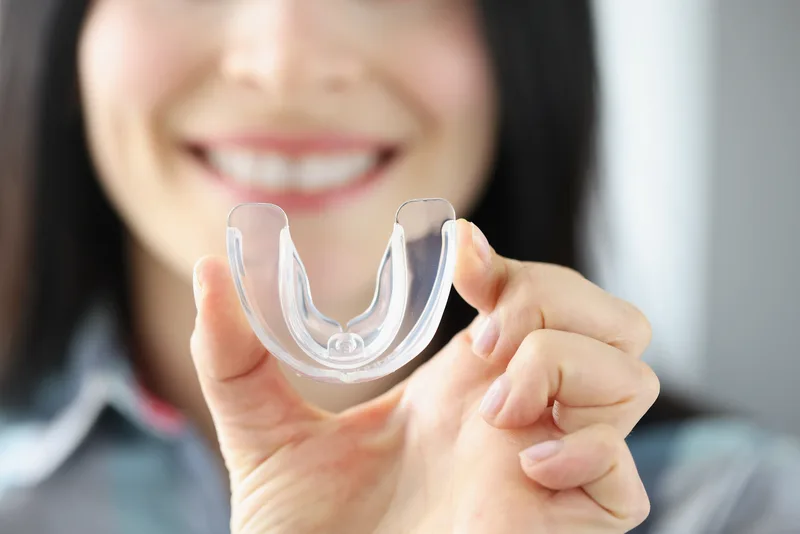
At Happy Children Pediatric Dentistry, this guide explains Invisalign® for teens, including how clear aligners work, who they help, and what families can expect from start to finish. Teens who want straighter teeth without brackets and wires can explore the steps, benefits, and day-to-day tips below.
About Invisalign for Teens
Invisalign treatment uses a series of custom clear aligners to gently move teeth into better positions. Each set of aligners is designed from digital scans and applies light, targeted forces to specific teeth. Aligners are removable, smooth, and nearly invisible when worn. Many teen patients choose this option to address crowding, spacing, overbites, underbites, and crossbites.
Teen-specific features help with growing smiles and accountability. Wear-indicator dots fade with consistent use, making it easier to track wear time. Small tooth-colored attachments may be placed on certain teeth to improve grip and movement. In some cases, elastics or minor enamel shaping between teeth are part of the plan to refine the bite.
How Clear Aligners Can Help Teens
Clear aligners can fit well into busy school, sports, and social schedules. Below are common advantages teens and families appreciate.
- Discreet appearance blends in for photos, school events, and daily life.
- Removable design makes it easier to brush and floss effectively.
- No food restrictions because aligners come out for meals and snacks.
- Smooth edges reduce the risk of cheek and lip irritation during sports.
- Fewer urgent visits for broken brackets or poking wires.
- Predictable planning from digital modeling of tooth movement.
The Invisalign For Teens Process
While every plan is personalized, most teen aligner journeys follow a similar path:
- Consultation and evaluation to confirm candidacy and outline goals.
- Digital scans, photos, and X-rays to create a precise 3D model.
- Custom treatment planning that maps each stage of tooth movement.
- Aligner delivery with instructions on insertion, removal, and care.
- Consistent wear for 20–22 hours per day, removing only to eat and brush.
- Regular changes to the next aligner in the series, often weekly or biweekly.
- Periodic check-ins to monitor progress and adjust as needed.
- Finishing phase with retainers to help maintain the new smile.
What to Expect Day to Day
Aligners are designed for comfort, but mild pressure or soreness is common for a day or two when switching to a new set. Speech may feel slightly different at first and usually normalizes within a few days. Good home care habits support healthy results:
- Wear aligners 20–22 hours daily for the most effective movement.
- Remove aligners to eat or drink anything besides cool water.
- Brush and floss after meals before placing aligners back in.
- Rinse aligners with cool water and brush them gently with a soft toothbrush.
- Avoid hot water, which can warp the plastic.
- Use a protective mouthguard for contact sports when aligners are out.
- Keep the previous set as a backup in case an aligner is lost.
Time in treatment varies based on needs and cooperation. Many teen cases range from about 6 to 18 months, though simpler or more complex plans can be shorter or longer. Staying on schedule with wear time and check-ins supports predictable progress.
For questions about Invisalign for Teens in Atlanta, GA, or to schedule a consultation with our pediatric dentist, contact Happy Children Pediatric Dentistry in Atlanta, GA at 770-541-9131.
Frequently Asked Questions About Invisalign for Teens
Request an Appointment
Connect With Happy Children Pediatric Dentistry
We make every visit comfortable and convenient. Send us a message and our team will get back to you shortly to confirm details and answer your questions.